What Should I Put on a Thank You Card for Online Orders?

The Four Things Every Thank You Card Needs
A thank-you card is not a landing page. It has room for four things, and adding a fifth makes the other four work less well.
The first is who it is from. Your logo or your business name, at the top, so there is no ambiguity about which of the three parcels on the doorstep this came from.
The second is who it is to. The buyer's first name. This single element changes the read more than anything else on the card, because it proves the card was produced for this order rather than printed a thousand at a time.
The third is the message itself. Two or three sentences, warm, specific, and true. Not "we appreciate your business." Something a human would actually say.
The fourth is one action. A review link, a discount for next time, a care guide, a signup. One. Merchants selling on OpoShop often try to fit three actions on a card and end up with a customer who takes none of them.
What to Actually Write
The hardest part of a thank-you card is the two sentences in the middle. It is also the part OpoShop merchants rewrite the most. Here is how to find them.
Start from something true about how the order was handled. If you packed it yourself, say so. If it was made to order, say when. If the customer picked an unusual combination, notice it. Specificity is what makes a note feel like a note.
Compare these two openings. "Thank you for your purchase. We hope you enjoy your order." versus "Thanks so much, Jane. Your order was packed by hand this morning and I hope it is exactly what you wanted." The second is barely longer and does considerably more.
Here is what tends to land:
- Name them: "Thanks so much, Jane" beats "Dear Customer" by a wide margin and costs nothing to add.
- Say something true: Packed by hand, made this week, wrapped by the person who makes them. Only if it is actually true.
- Acknowledge the choice: They could have bought from anyone. A line recognising that reads as genuine rather than transactional.
- Sign it as a person: "Sadie" or "The Sunday Girls Club team" reads better than a company name alone.
- Offer a way to reply: "If anything is not right, just reply to your order email" removes friction and prevents a bad review.
That last one is quietly the most valuable line on many cards. A customer with a small problem will either tell you or tell the internet. Telling them exactly how to reach you makes the first outcome more likely.
What to Leave Off
Most thank-you cards fail by addition, not omission. The cards that perform best across OpoShop stores are the ones with the least on them. Here is what earns its way off the card.
Your founding story. Nobody unwrapping a product wants three sentences about how the brand began in a kitchen. Save it for your about page, where people go when they are actually curious.
A row of social icons. Following you benefits you, not them. If you genuinely want social follows, make it the one action and give a reason.
Multiple discount codes. Two codes on one card means the customer has to make a decision, and the most common decision is to make none.
A QR code with no explanation. A bare square with no label is a mystery box, and most people will not scan a mystery. Label it: "Scan to leave a review" or "Scan for 15 percent off."
Tiny type. If the message is small enough that a customer has to hold the card up to the light, the design is fighting the message. Twelve point minimum for body text on a 4 by 6 card.
Legal language. Terms and conditions on a thank-you card change the emotional register completely. If the discount needs conditions, one short line of small print at the bottom is the whole budget.
How to Write and Print Your Card
The fastest way to a good card is to write badly first, cut it in half, and then print one before you print a hundred.
Here is how those steps look in real life.
1. Draft long, publish short
Write four or five sentences without editing. Then cut the one that is about you rather than them, cut any sentence starting with "we are passionate," and cut adjectives that do not carry information.
What is usually left is a greeting with a name, one specific true thing, and one offer of help. That is the card.
2. Personalise from the order
Merge fields turn one piece of copy into hundreds of correct cards. Writing "Thanks so much, {{first_name}}" once means a batch of two hundred cards each carries the right name.
The order number matters too, though for a different reason. Printed small at the bottom of the card, it lets whoever is packing match the right card to the right parcel. Once you are shipping more than a handful a day, that stops being a nicety. Stores running on OpoShop already have both fields attached to every order.
3. Decide what a blank card does
Not every order needs the same message. A first-time buyer and a fourth-time buyer are in different places, and a card that says "thanks for trying us" reads oddly on someone's fourth order.
If you only want one card, write it so it works for both. "Thanks so much for this one" is true whether it is the first or the fifth.
Thank You Card vs Reorder Card vs Review Card
These three cards look similar and do very different jobs. Picking the wrong one for your product is a common and quiet mistake.
| Card type | Best for | Why it works | Watch-out |
|---|---|---|---|
| Thank-you card | First orders, gift purchases, handmade goods | Builds goodwill and makes a small brand feel personal | No measurable action, so it is hard to prove it worked |
| Reorder card | Consumables and repeat-friendly categories | A dated discount gives an obvious reason to come back | Costs margin on every redemption, so the percentage matters |
| Review card | Newer stores that need social proof | Reviews compound and help every future visitor convert | Asking too early, before the customer has used the product |
Most stores start with a thank-you card because it is the safest and the warmest. It is a good instinct. The trade-off is that pure gratitude produces nothing you can count, so you will not know whether it moved anything.
A practical middle path is a thank-you card that carries one small action. Warm message, then a single line: "If it made your day, a review helps us more than you would think." You keep the warmth and get something measurable.
For consumables, lean toward the reorder card. A candle buyer does not need convincing that you are nice. They need a reason to come back in eight weeks, and a dated discount is exactly that.
Examples That Work
Abstract advice only goes so far. Here are three cards in full, each one written the way a small OpoShop brand actually talks, so the length and register are concrete.
For a handmade jewellery brand: "Thanks so much, Jane. Your necklace was made and packed this week by hand, and the little pouch is for keeping it from tangling. If anything is not right, just reply to your order email and I will sort it. Sadie"
For a candle brand with a reorder offer: "Thanks for the order, Marcus. First burn matters most, so give it three hours to melt right to the edge. When you are ready for the next one, the code below takes 15 percent off through October."
For an apparel brand asking for a review: "Thanks so much, Priya. This was folded and packed this morning. If it fits the way you hoped, a quick review helps a small brand more than you would guess. Scan below, it takes twenty seconds."
Notice what all three share. A name. One true, specific detail. One action or one offer of help. None of them mention a mission, and none of them are longer than fifty words.
The jewellery card has no measurable action at all, and that is a legitimate choice for a gift-heavy category where the warmth is the point. The other two each carry exactly one, which is what keeps them working.
Making Sure the Card Actually Gets Read
A card that slides out with the packing slip and lands in the recycling never had a chance. This is the part of the OpoShop unboxing that merchants control completely and think about least. Placement matters nearly as much as copy.
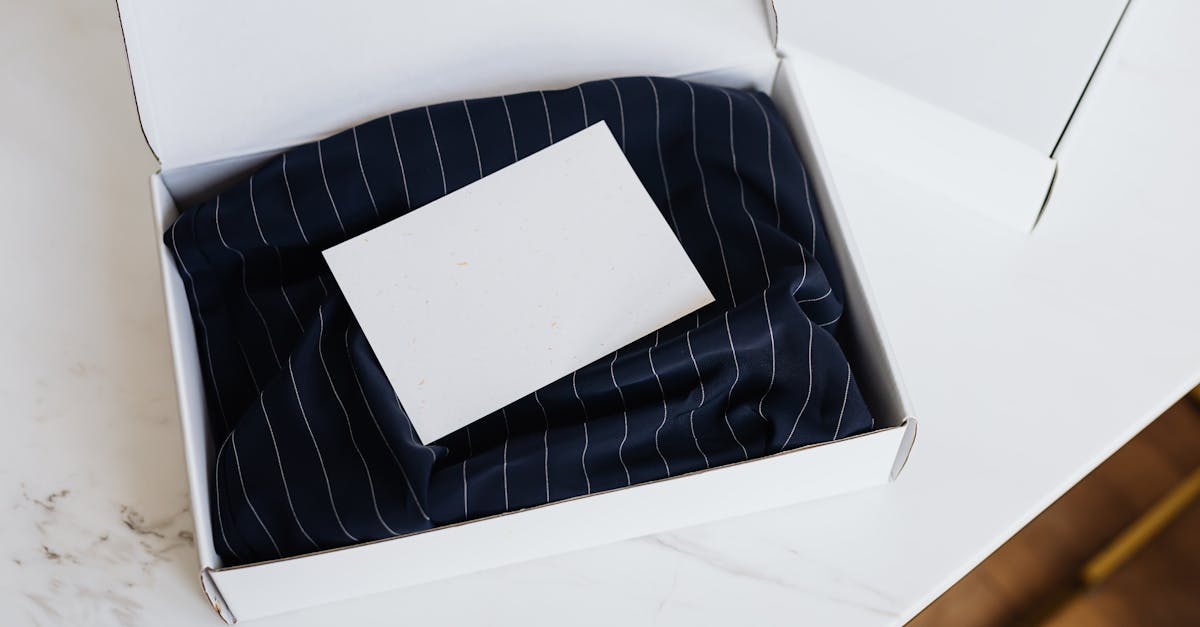
Put the card on top of the product, not underneath it. The customer should see it before they see the thing they ordered, in the second when their attention is highest.
Keep it visually distinct from the paperwork. If your packing slip is white A4 and your card is also white and rectangular, both get treated as paperwork. A different size, a coloured edge, or heavier stock separates them instantly.
Do not fold it unless the fold does work. A folded card with a blank outside is a card most people do not open.
Give the reverse a job. Care instructions, your handle, or a repeat of the discount code. A blank back makes a card feel like a leftover.
If your product is small enough that the card dwarfs it, size down. A 4 by 6 card in a jewellery box looks wrong. That is what the business card size is for, as long as you keep to one action.
Should a Thank You Card Include a Discount?
This is the most common question about thank-you cards and the answer genuinely depends on your margin and your category.
Include one if your product is consumable or naturally repeat-friendly, and if you can afford the percentage on a second order you might not otherwise get. Candles, coffee, skincare, socks. A dated code is the strongest tool you have for pulling a second purchase.
Skip it if your margins are thin or your product is a once-every-few-years purchase. A discount on a $28 handmade item with a small margin can cost more than the repeat order is worth, and a customer who bought a wedding gift is not buying another one in sixty days.
There is a third option people forget. Offer something that costs you nothing: early access to a new release, a care guide, or a free personalisation on the next order. It creates a reason to come back without touching the price.
If you do print a code, make it unique per order and give it an expiry date. A unique code lets you count redemptions and know whether the card is working. An expiry gives the customer a reason not to set it aside. Both are easy to set up on OpoShop and both make the card measurable rather than decorative.
Best answer: A thank-you card should carry your brand, the customer's first name, two or three true sentences, and exactly one action. Keep it under sixty words, print the order number small at the bottom so packing stays accurate, and generate it from your OpoShop order data so the personalisation happens automatically. Everything else you are tempted to add makes the card work less well.
If you want a card that writes itself for every order, start from your order data instead of a blank page.
FAQs
How long should a thank you card message be?
Under sixty words. The customer is reading while holding a product, so you have about four seconds of attention. A greeting with their name, two or three sentences, and one action fits comfortably. Anything longer gets skimmed rather than read.
Should I handwrite thank you cards?
Handwriting is lovely and it stops scaling somewhere around ten to twenty orders a day. A good middle ground is a printed card personalised with the customer's first name, which reads as thoughtful and takes no extra time per order. Some brands print the card and add one handwritten word.
Do I need to include a discount on a thank you card?
No. A discount makes sense for consumables and repeat-friendly products where a second order is likely. For thin margins or infrequent purchases, a review request or a care guide is often a better use of the space, and it costs nothing.
What should I sign the card with?
A person's name works better than a company name for small brands, because it reinforces that a human handled the order. "Sadie" or "The Sunday Girls Club team" both read well. Avoid signing with nothing, which makes the card feel automated.
Where should the card go in the package?
On top of the product, so it is the first thing the customer sees when they open the box. Keep it visually different from your packing slip, because a card that looks like paperwork gets treated like paperwork and goes straight in the recycling.
Can I use the same thank you card for every order?
You can, and it is a fine place to start. Just write the copy so it reads correctly for both a first-time and a repeat buyer. Once you have volume, many stores switch to a thank-you card for first orders and a reorder offer for returning customers.
Ready to put a real note in every box? Start with the name and one true sentence.