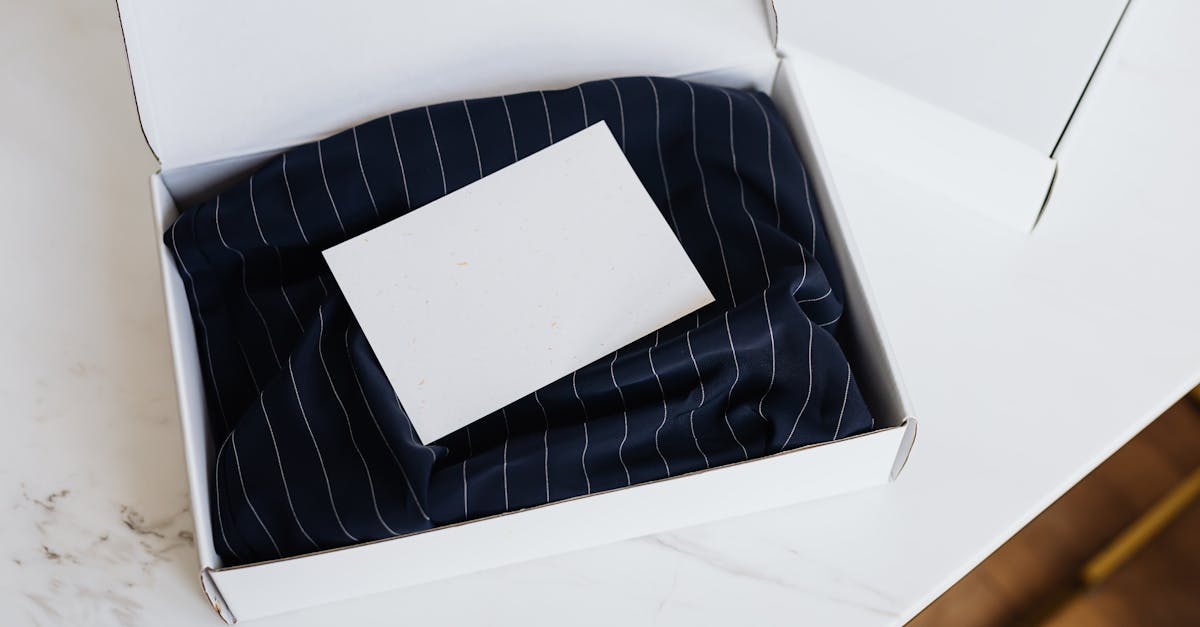
What Should I Include on a Care Card for Handmade Products?

Why Handmade Products Need a Care Card
A care card is not a courtesy, and for handmade sellers on OpoShop it is rarely optional. It is a retention tool, and one of the few inserts that pays for itself by preventing something rather than causing something.
Handmade products almost always have a handling quirk. A hand-poured candle needs a long first burn or it tunnels. A hand-dyed textile bleeds if washed hot. Raw brass tarnishes. Untreated wood splits near a radiator. None of these are defects, and every one of them looks like a defect to a customer who was not told.
That gap is expensive in three ways. You get a support email. You may get a refund request. And you almost certainly do not get a second order, because in the customer's mind the product failed.
A card that prevents all three costs a few cents. For a small OpoShop brand where each customer took real effort to acquire, that is one of the better returns available on a piece of card stock.
The Four Things Every Care Card Needs
A good care card is shorter than most people expect. Four elements, and each one is doing a specific job.
The first is what to do. Actions, not descriptions. "Wash cold, inside out" rather than "this item is made from a delicate natural fibre."
The second is what not to do. Usually one thing, the single mistake most likely to ruin the product. Put it first if the risk is high, because that is the line you most need read.
The third is how to store it. Handmade goods are disproportionately damaged in storage rather than use. Folded not hung, out of sunlight, in the pouch provided.
The fourth is what to do if something goes wrong. One line: "If anything is not right, just reply to your order email." This is the line that converts a would-be one-star review into a conversation, and it belongs on every care card.
Writing Instructions People Actually Follow
The difference between a care card that works and one that gets binned is entirely in the writing. This is where most OpoShop makers over-explain.
Lead each line with a verb. "Wash cold." "Store flat." "Trim the wick." An instruction that starts with an action reads as something to do. One that starts with a noun reads as information, and information gets skimmed.
Give the reason only when it changes behaviour. "Trim the wick to 5mm before each burn" is fine on its own. "Trim the wick to 5mm before each burn to stop it smoking" is better, because the customer now knows what happens if they do not, and that is the part that makes them do it.
Here is the pattern that tends to work:
- Lead with the verb: Wash, store, trim, avoid, keep. The action is the first word.
- Be specific with numbers: "Wash below 30 degrees" beats "wash cool." "Burn for three hours" beats "burn for a while."
- One instruction per line: Two actions in one bullet means the second one gets missed.
- Put the highest-risk item first: People read the top of a list. Put the mistake that ruins the product there.
- Cap it at six: More than six lines and the card becomes a manual, and manuals get set aside.
What to leave out is just as important. The material's provenance, your process, the name of the technique, and how long you have been making them are all interesting and none of them help the customer keep the thing in good condition. Save that for the product page.
Building a Care Card for Your Product
The work here is deciding what to say, not designing it. An hour of thinking produces a card you use for years.
Here is how those steps go in practice.
1. Mine your own support inbox
You do not need to guess what belongs on the card. Every email that starts "is it meant to do this" is a line item.
Go back through six months of messages and returns. Count the reasons. The two or three that come up repeatedly are the instructions that matter, and they are almost always things you assumed were obvious.
This is also the honest test of whether you need a care card at all. If nobody has ever asked, a thank-you card may be a better use of the slot.
2. Write it for someone who has never owned one
The trap with handmade goods is that the maker knows the material intimately and forgets what is not obvious.
Someone who has never owned a hand-poured candle does not know that the first burn sets the memory of the wax. Someone who has never owned raw brass does not know it will darken and that this is normal. Write the card for that person.
Read it back and ask: could someone follow this without knowing anything about how it was made? If not, add the missing step.
3. Match the card to the product category
The right instructions vary enormously, and generic care advice is worse than none.
For textiles: washing temperature, whether to hang or lay flat, ironing, and pilling. For candles: first burn duration, wick trimming, and burn time limits. For jewellery: water and perfume contact, tarnish and how to clean it, and storage. For skincare: patch testing, storage temperature, and how long after opening it stays good. For wood and leather: humidity, direct sun, and conditioning.
If you sell across categories, that is an argument for more than one care card rather than one generic one. Two or three cards is manageable, and merchants generating them per product type from their OpoShop catalogue can print the right one alongside the right order.
Care Card vs Product Page vs Hang Tag
The same information can live in three places on an OpoShop store, and each reaches the customer at a different moment.
| Placement | When it is seen | Why it works | Watch-out |
|---|---|---|---|
| Care card in the box | At unboxing, and again whenever it is kept | Arrives with the product and can be kept near where it is used | Costs a few cents and can be thrown out with the packaging |
| Product page section | Before purchase, rarely after | Sets expectations and reduces returns from mismatched expectations | Almost nobody goes back to a product page to check how to wash something |
| Sewn-in or hang tag | Every time the item is handled | Physically attached, so it cannot be separated from the product | Tiny space, and customers cut tags off immediately |
The care card wins on the specific job of being available when the customer needs it, which is usually weeks after purchase when they are about to wash or store the thing.
The product page is worth having anyway, mostly for pre-purchase reassurance and for the customer who searches your site later.
Hang tags are excellent for textiles when they carry the two most critical instructions, but they are too small for a real guide, and a lot of people cut them off before wearing.
The practical answer for most handmade brands is a care card in the box and a short care section on the product page. Duplicate content is fine here. The goal is that the information is wherever the customer happens to look.
Making a Care Card Feel Like Your Brand
A care card is a functional document, which is exactly why a bit of warmth goes a long way. It should still look like the rest of your OpoShop packaging.
Keep the brand elements the same as your other inserts. Same logo, same accent colour, same typeface. A care card that looks like it came from a different company undermines the effort you put into the rest of the packaging.
Let the voice through in one place. A single line at the top or bottom that sounds like a person, then straight into the instructions. "A few small things that keep this looking new" is warmer than "Care Instructions" and costs you nothing.
Do not let the personality invade the instructions themselves. Cute phrasing in a washing instruction creates ambiguity, and ambiguity is how a wool scarf ends up in a hot wash.
Consider the reverse of the card too. A care guide is a natural place to put a QR code linking to a longer version online, particularly for products where a video helps. Label it clearly, and remember the linked page needs to still exist in two years.
Common Care Card Mistakes
The failure patterns are consistent and easy to avoid once you know them.
Writing paragraphs instead of bullets. A block of prose about fabric care will not be read while someone is standing at a washing machine.
Too many instructions. Ten lines means the customer reads two. Six is the practical ceiling and four is usually better.
Burying the critical one. If washing hot destroys the item, that is line one, not line five.
Using jargon. "Do not agitate" means something specific to you and nothing to most customers. "Do not scrub or wring" is clearer.
Making legal-sounding disclaimers the focus. A care card that reads as a liability shield changes the emotional register of the whole unboxing. If you need a disclaimer, one small line at the bottom.
Printing it too small. A care card squeezed onto a business card is a card nobody can read at arm's length. Care guides need space, which is why A6 and 5 by 7 exist.
Forgetting to update it. If you change your materials or your supplier, the card in the box is now wrong. Merchants who keep their card templates in one place in their OpoShop workflow can update once rather than finding three stale versions in a drawer.
Best answer: A care card for handmade products should carry four to six action-led instructions, the single mistake that ruins the item placed first, a storage line, and one sentence telling the customer how to reach you if something is wrong. Mine your own support inbox for the content, write every line starting with a verb, and print it at A6 or larger so it is readable. Generate it alongside the order in your OpoShop store so the right card ships with the right product.
If your support inbox keeps answering the same question, that question belongs on a card in the box.
FAQs
How many instructions should a care card have?
Four to six. Fewer than four and the card feels thin, more than six and people stop reading. Rank your instructions by how often the mistake happens and how badly it ruins the product, keep the top few, and cut the rest.
What size should a care card be?
A6 or 5 by 7 inches for four to six instructions, and A5 if you need a folded guide with more detail. Avoid business card size for care information, because the type ends up too small to read comfortably at arm's length, which is exactly when people read care cards.
Should the care card be separate from the thank you card?
Usually yes, because they do different jobs and each works better with a single purpose. A thank-you card carries warmth and one action. A care card carries instructions. If you only want one card in the box, put the thank you on the front and the care instructions on the back.
What should I write if my product needs no special care?
Then you probably do not need a care card, and a thank-you card or a reorder offer is a better use of the slot. Check your support inbox first though. Merchants are often surprised to find customers asking about something they assumed was obvious.
Can a care card reduce returns?
Often yes, because a large share of returns on handmade goods are products that were damaged by ordinary handling rather than products that arrived faulty. An instruction that prevents the damage prevents the return, and the line offering help before anything else is done prevents more.
Should I put a QR code on a care card?
It works well if you have a longer guide or a video online, particularly for products where technique matters. Label the code clearly so people know what they are scanning, and make sure the destination page will still exist years later, because care cards get kept for a long time.
Ready to stop answering the same care question? Put the answer in the box.